Accredited courses from leading Australian universities, TAFEs and colleges


Qualification Level
Accredited courses from leading Australian universities, TAFEs and colleges



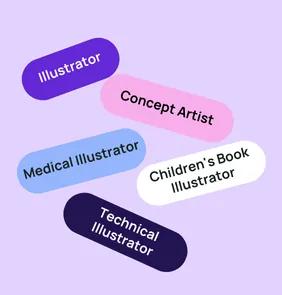
The illustration field mixes creative work with real business value. Illustrators use drawing, painting and digital tools to share ideas through pictures. Demand for good visuals keeps growing across publishing, ads, games and online marketing.
According to Jobs and Skills Australia, roughly 3,400 people work as illustrators across the country. Around 30% work part time, and the median age is 34. Women make up around 36% of the workforce, so the field skews young.
Illustrators find work in media, arts and recreation, and in scientific and technical firms. This gives graduates several paths rather than one narrow track. The wide range suits people who want to move between ads, editorial work, game design and branding over a career.
Digital tools and online content keep growing fast. Illustrators with strong skills and a flexible style are well placed to build a long career in this busy creative field.
Illustration workers may earn between $58000 and $115000 per year
According to SEEK Career Advice (2026), illustrators in Australia typically earn between $80,000 and $95,000 a year. Indeed (2026) reports a national average closer to $81,000, with entry-level pay starting around $58,000 and experienced or senior illustrators earning upward of $115,000.
Finishing a course in illustration or graphic design opens up a genuine mix of creative career paths. Graduates often go on to work as a:
Illustrators bring ideas to life through images, working across publishing, advertising, gaming, animation and branding projects. Their day-to-day work usually includes:
Many illustrators also keep building their craft outside client work, experimenting with new styles and tools to stay current in a fast-moving creative field.
Building a career in illustration calls for both creative talent and practical discipline, and people who thrive in this field tend to bring:
These strengths tend to matter more than raw natural talent once you are working to real client briefs and deadlines.
The job market for illustrators and designers spans ad agencies, publishers, media firms, game studios and in-house design teams. Freelance work is also common. This gives skilled illustrators the freedom to build a client base across several fields at once.
Jobs and Skills Australia data shows illustrators work full time at a higher rate than the wider workforce. Demand for good visuals across digital platforms keeps steady work coming for skilled people in this field.
Studying illustration or graphic design opens up a career built on creativity, skill and steady learning. Graduates can move into publishing, ads, games, branding or film, often shaping how people take in a message.
Most people start with a certificate IV, diploma or bachelor’s degree in design or visual media. Study builds a folio alongside real training in tools such as Adobe Creative Cloud. It also helps graduates learn about branding, client work and industry standards.
Demand for skilled illustrators keeps growing as firms spend more on visuals across digital platforms. The questions below cover common queries about study paths, career options and what to look for in a course.
Graduates work as illustrators in publishing, advertising, gaming, animation and education. Some choose freelance work, while others join studios or agencies. With a degree, you can also move into concept design, art direction or creative leadership roles.
Graphic design focuses on layout, branding and visual communication, while illustration centres on storytelling through drawing and imagery. Many professionals combine both skill sets to build versatile careers in digital media and publishing.
Yes. Professionals often pursue a postgraduate qualification in design, visual communication or fine arts. This can help them specialise in a niche such as animation or interactive illustration.
Yes, particularly for illustrators with strong digital skills. Growth in creative technology, animation, gaming and e-learning is supporting steady demand for visual talent.
Choose a course that offers industry placement opportunities, portfolio support and up-to-date software training. A Bachelor of Communication Design is one option worth comparing if you want a broad grounding in the field.