Accredited courses from leading Australian universities, TAFEs and colleges


Qualification Level
Accredited courses from leading Australian universities, TAFEs and colleges



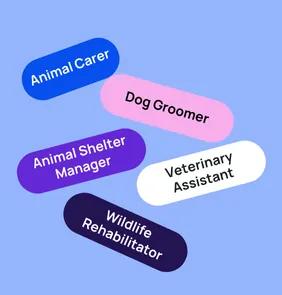
Animal care is the broad field behind every clipped nail, vet check and shelter rescue across Australia. It includes grooming, boarding, shelter work, wildlife care and support roles in vet clinics. Jobs and Skills Australia (2025) counts 27,200 workers in this field nationally. Women make up 74% of that group, with a median age of 36.
Growth in this field tracks pet ownership, which keeps rising across Australian homes. Employers value staff who understand animal behaviour, basic health checks and hygiene. Genuine care for the animals in front of you matters just as much. These skills can open doors into supervisor, grooming-specialist or shelter-coordinator roles as your experience builds.
Formal study runs through the national ACM training package on training.gov.au. A Certificate II in Animal Care gives newcomers a solid start in handling, feeding and welfare basics. A Certificate III in Animal Care Services then builds toward more advanced work, including pet grooming. Many of these courses qualify for government-funded places, which makes a career change more affordable.
Flexible study modes, such as online theory paired with real placements, let career changers retrain without giving up other work. For anyone drawn to hands-on, animal-focused work, this field offers a steady, varied path forward.
Animal Care workers may earn between $48000 and $95000 per year
Jobs and Skills Australia (2025) records median full-time earnings for animal attendants and trainers at $1,276 a week, or around $66,000 a year. That sits below the $1,852 median across all occupations. SEEK’s 2026 career advice data puts average animal attendant pay between $60,000 and $70,000 a year. Pay tends to rise with experience and supervisory responsibility. Moving into a specialist area, such as grooming or shelter management, can lift pay further. Senior welfare roles can reach close to $95,000 a year.
Once you complete a course in animal care, a genuine range of roles opens up across shelters, clinics and grooming businesses. Graduates commonly move into positions such as a:
People working in animal care look after the day-to-day wellbeing of the animals in their charge. That animal might be a family pet, a shelter resident or one awaiting veterinary treatment. Their day-to-day tasks may include:
Many people in this field also work closely with other organisations, from local councils to welfare charities, to promote good practice across the sector. Some go on to specialise in areas such as grooming, wildlife rehabilitation or shelter management as they gain experience.
Whatever the setting, animal care workers play a genuinely important part in keeping animals safe, healthy and well cared for across the country.
Doing well in animal care takes more than a love of animals, although that certainly helps. The strongest workers pair hands-on skill with patience and a genuine sense of responsibility for the animals in their care. Before committing to this field, look for these traits in how you work:
Job openings in animal care keep growing alongside rising pet ownership across Australia. Jobs and Skills Australia (2025) counts 27,200 people working in this field nationwide. Roles are spread across shelters, boarding places, grooming salons and vet clinics. About half of these roles are part time, which suits people who study or juggle other work.
Beyond private employers, jobs also exist with local councils, wildlife parks and charities such as the RSPCA. Median full-time pay in this field sits below the median for all jobs. Pay tends to rise with time on the job, a special skill set or a step up into a team lead role.
Public interest in animal welfare keeps growing across the country. That interest drives demand for skilled, caring staff who can meet rising care standards. It points to a steady field that is easy to start in.
Higher-level study builds deeper knowledge of animal behaviour and care standards. It suits people aiming for team leader roles or a move into a specialist area, such as wildlife care.
Yes. An animal care qualification can lead to roles in wildlife rescue, national parks and zoos. Extra study in ecology can help you move further into these fields.
Jobs and Skills Australia (2025) reports steady jobs in this field nationwide. Demand tracks closely with rising pet ownership in both cities and regional areas.
Yes. Most accredited courses include hands-on placements in shelters, clinics or boarding facilities. Graduates gain real workplace experience before they finish studying.