Accredited courses from leading Australian universities, TAFEs and colleges

Hospitality Courses



About Hospitality
Hospitality is a major and growing part of the Australian economy. The sector employs close to a million people nationally, or about 6.5% of the total workforce (Jobs and Skills Australia, February 2026). Cafes, restaurants and takeaway food outlets employ the largest share of that workforce.
The workforce here is notably young. The median age sits at just 26, and women make up 52% of workers. Around six in ten hospitality staff work part time, which suits people balancing study, family, or a second job. This flexibility is one reason the sector appeals to career changers as well as school leavers.
Career paths range broadly across the industry. Waiters and bar attendants sit at entry level, while cafe and restaurant managers oversee daily operations and staff. A Diploma of Business (Hospitality and Tourism Management) gives graduates the operational and financial skills needed to step into these leadership positions.
Earnings reflect that career progression. Cafe and restaurant managers earn a solid weekly wage that scales with the size of the venue they run. Hospitality managers advertise between $80,000 and $100,000 a year, according to recent SEEK career advice data. With this kind of earning potential attached to genuine progression, hospitality offers a practical route toward a management career.
Average Salaries
Hospitality workers may earn between $45000 and $105000 per year
Median weekly earnings across the accommodation and food services sector sit at $1,300, or roughly $67,600 a year (Jobs and Skills Australia, February 2026). Cafe and restaurant managers earn a median of $1,441 a week, closer to $75,000 a year.
SEEK’s career advice data (June 2026) lists average chef salaries between $75,000 and $80,000, while hospitality managers advertise between $80,000 and $100,000. Executive chefs can earn considerably more, with SEEK listing average salaries between $105,000 and $125,000 for senior kitchen leadership roles.
Career Outcomes
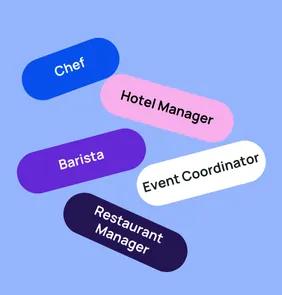
Once you finish a hospitality course, a wide range of roles open up across venues, hotels and events. Common job titles in this field include:

















What do Hospitality graduates do?
People working in hospitality help create great experiences for guests and diners. Their day-to-day work often includes:
- Serving food and drinks in cafes, bars and restaurants.
- Cooking meals and running the kitchen as a chef or cook.
- Checking guests in and out at a hotel front desk.
- Planning shifts and running the floor at a busy venue.
- Taking payments and using point-of-sale tills.
- Keeping the kitchen clean and food safe to eat.
- Solving guest problems on the spot and with a smile.
Many hospitality staff also train new team members once they gain some experience. This work suits people who stay calm under pressure and enjoy a busy room. It also gives you a clear path from your first shift into running a whole venue.
Is Hospitality right for you?
Doing well in hospitality takes a mix of skills and the right attitude. Employers usually look for:
- Strong people skills and a friendly manner.
- The ability to stay calm during a busy, fast shift.
- A real love of good service.
- Good teamwork and a reliable nature.
- Fitness for standing and moving all shift.
- Care with food safety and hygiene.
- A flexible approach to nights, weekends and holidays.
- Basic maths for handling cash and stock.
- A cool head when things go wrong.
- Some drive to lead a team down the track.
If this sounds like you, hospitality could suit you well. It rewards people who are warm, steady and keen to work as part of a close team.
Job opportunities
Job opportunities in hospitality remain strong across Australia. The sector employs close to a million people, and it added thousands of new roles last year alone. That makes it one of the steadier growth areas in the job market right now (Jobs and Skills Australia, February 2026).
Waiters, chefs, kitchen staff and bar workers fill the largest number of roles. Cafe and restaurant managers oversee daily work and staff on top of that. Pay across the sector is solid, and it climbs fast once you move into a supervisor or manager job.
Demand spreads across hotels, pubs, clubs, cafes and restaurants, so you can pick where and how you want to work. Ongoing training and real shift experience both help you move up from an entry role into management.
Frequently Asked Questions
FAQs
What are the long-term career options in hospitality?
With experience, you can move into roles like venue manager, hotel manager, or food and beverage director. Some people go on to open and run their own venue.
Can a hospitality diploma lead to management jobs?
Yes. A Diploma of Business (Hospitality and Tourism Management) teaches real budgeting and staffing skills. Hotels and larger venues look for exactly these skills when hiring supervisors.
What’s the difference between hospitality and tourism courses?
Hospitality focuses on service in venues like restaurants, hotels and bars. Tourism covers travel planning and the wider visitor experience. Some courses cover both, giving you more career options.
Are there postgraduate options in hospitality?
Some universities offer postgraduate study in hospitality leadership or business. These suit experienced staff moving into senior roles.
What should I look for in a strong hospitality course?
Look for national recognition via training.gov.au. Real work placements and hands-on training with booking and payment systems both matter too.


