Accredited courses from leading Australian universities, TAFEs and colleges


Qualification Level
Accredited courses from leading Australian universities, TAFEs and colleges



Security is one of Australia’s most accessible fields to train into. It now covers far more than the traditional guard role. Employers need people who can manage sites, run event safety, look into incidents and advise on risk. This spans corporate and government settings alike. Jobs and Skills Australia counts more than 66,800 people working as security officers and guards. The job is adding roughly 2,600 roles a year.
Entry usually starts with a certificate II-level security qualification, the minimum most states need before they issue a security licence. Those who want to move beyond frontline guarding often study a Certificate IV in Security Risk Analysis or a Certificate IV in Security Management. These build the assessment and leadership skills needed for supervisory work.
For those ready to step into consulting or operations leadership, a Diploma of Security Risk Management is a solid next step. Pay in the sector is set out under the Fair Work Security Services Award, which sets minimum rates for guarding and patrol work.
Because licensing sits with state and territory regulators, course quality matters. Look for a provider whose training matches your state’s licensing rules and covers the hands-on assessment parts your licence needs.
Security workers may earn between $55000 and $140000 per year
According to Jobs and Skills Australia (2026), security officers and guards earn a median of $1,818 a week before tax. That is roughly $94,500 a year for full-time work. Entry-level guards typically start closer to $55,000, while security risk analysts and consultants with several years of experience can earn upward of $140,000 a year.
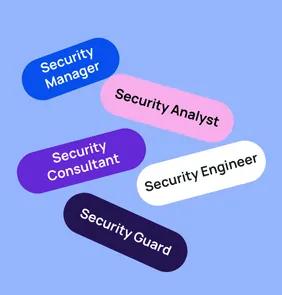
After finishing a security course, most graduates move into a role with a private firm, a government body or an in-house team. Common job titles include:
People working in security protect people, property and data from harm. The job often means moving between sites and tasks in the same shift. Much of the work is about spotting problems early, then acting fast when something goes wrong.
Across every role, security staff help firms and towns stay safe. This gives the public trust that people, property and data are properly protected.
Doing well in security calls for a practical mix of good judgement, a calm head and solid technical know-how. Useful skills include:
Job openings in security keep growing. More firms now treat safety of staff, sites and data as a core need, not an afterthought. Graduates can find roles across government, corporate and private security providers, including:
Jobs and Skills Australia expects steady growth in security roles across the country. It projects around 2,600 new jobs a year as demand rises across events, infrastructure and corporate work. This growth gives graduates plenty of entry points and room to move up.
A security course opens more career doors than many people expect. This holds true for those who want to move beyond frontline guarding into planning, advice or lead roles. Employers value staff who grasp both the on-site and paper-based sides of keeping people, property and data safe.
Growth from an entry-level licence tends to follow a clear path. With time on the job, many move into roles such as team leader, site supervisor or risk adviser. Some go on to corporate risk work or investigations instead.
After gaining experience, security staff often move into roles such as team leader, site supervisor or risk adviser. Some move into corporate risk work instead.
A Certificate IV in Security Risk Analysis or a Diploma of Security Risk Management suit lead or planning roles well. Both can also lead into further study in criminology or public safety.
Accredited courses are built to meet the rules set by each state’s security licence body. They usually cover legal rules, incident reports and duty-of-care training.
Yes. Many police and law staff take extra security courses to open doors in the private sector or in advice work. A formal course proves your skills and widens your scope of work.
Increasingly, yes. Roles that mix physical and digital security, such as camera checks or system monitoring, are on the rise. A security course gives a solid base for these blended jobs.