Accredited courses from leading Australian universities, TAFEs and colleges

Administration Courses



About Administration
Admin is the backbone of Australian business. The industry employs around 434,200 people, and women make up 52% of the workforce, according to Jobs and Skills Australia data from February 2026. Work spans office support, personnel help, paperwork and client care across nearly every sector.
The industry has grown for two decades straight, adding 2,700 workers in the past year alone. That steady rise shows how central admin skill has become to modern business, whether in health care, education or government. Employers increasingly want staff who mix strong organisation with confident use of digital tools.
Study paths start with a Certificate III in Business Administration for beginners. A Certificate IV or diploma suits those aiming at office management or specialist work. Many courses run flexibly, so you can study while you keep working. That suits people in customer-facing or entry-level jobs who want to move up without a pay gap.
Median weekly pay sits at $1,494, per the ABS (May 2025). Office managers earn a median of $1,730 a week. As firms keep investing in smooth day-to-day operations, skilled admin staff stay in steady demand right across the country.
Average Salaries
Administration workers may earn between $55000 and $95000 per year
Median weekly pay across the Administrative and Support Services industry was $1,494, per the ABS Survey of Employee Earnings and Hours (May 2025). That works out at around $77,000 a year. SEEK data from 2026 shows a wide range by role. Office admin staff typically earn between $65,000 and $75,000. Senior office managers can reach well over $90,000, showing how much pay rises with seniority in this field.
Career Outcomes
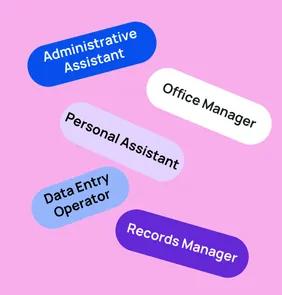
After completing a course in administration, graduates can move into a wide range of roles across almost any sector. Common positions include working as an:













What do Administration graduates do?
People working in admin handle a wide mix of tasks that keep a business running smoothly, often juggling several of them within the same day. This can include:
- Running office tasks and keeping the day-to-day workflow smooth.
- Setting up meetings, bookings and events for the wider team.
- Handling calls, emails and other messages with clients.
- Keeping records, files and databases accurate and up to date.
- Helping with hiring, onboarding and staff paperwork.
- Giving customer service and general support to visitors and staff.
- Writing reports, letters and presentation slides for managers.
- Booking travel and accommodation for staff on the move.
Many admin staff also help run small projects alongside colleagues from other teams. This can mean liaising with different departments, tracking budgets closely and making sure every deadline gets met on time.
Is Administration right for you?
To do well in admin, you need a mix of organisation and people skills, since the role rarely stands still for long. Care with detail matters most, along with clear communication in person and in writing, and the confidence to juggle a few tasks at once. A calm, steady way of working helps a great deal when priorities shift without warning.
- Good with time and staying on top of competing deadlines.
- Confident using office software and everyday workplace technology.
- Sharp at solving day-to-day problems as they come up.
- Able to work well alone and as part of a team.
- Comfortable handling private or sensitive information responsibly.
- Quick to adjust when plans or priorities shift suddenly.
- Strong focus on friendly, reliable customer care.
Job opportunities
The job market for admin staff stays solid, with steady demand across almost every sector. Jobs and Skills Australia data from February 2026 puts total jobs at around 434,200, and women make up 52% of that group. The field has grown for two decades straight, adding another 2,700 workers in the past year.
Work spans office admin, file management and customer support, with roles from entry-level assistant through to office manager. SEEK data shows admin officers typically earn between $65,000 and $80,000 a year, while office admin staff sit closer to $65,000 to $75,000. Office managers move well past that range. Median full-time pay for the role reaches $1,730 a week, per the ABS. Pay rises clearly as staff take on more weight.
Frequently Asked Questions
If you already work in admin or want a change of career, Australia offers clear paths into more senior and specialist roles. Diploma and advanced diploma courses build skills in office management, project support and business operations. These suit people ready to take on more weight or move into a lead role.
Diploma-level study helps most if you want an office manager or executive assistant job. These roles expect a broader grasp of budgets, staff coordination and business systems, on top of core admin skills. Many people also move into admin later in their careers, bringing experience from retail, hospitality or customer service work.
FAQs
What’s the difference between business and office administration?
Business admin has a broader focus, covering planning, operations and staff management. Office admin centres on daily clerical and support tasks. Both are useful paths, and a diploma-level course can bridge the two.
Are administration roles in demand?
Yes. Admin roles are vital for keeping a business running smoothly. With steady growth in fields such as health care, education and government, skilled admin staff stay highly employable.
How do admin roles differ across industries?
In health care, admin staff may handle patient bookings and medical files. In education, they help with enrolments and staff coordination. Picking a course that fits your field of interest can help you specialise early.
What can I study after an admin course?
Many students go on to study diplomas in leadership, project work or business. These can move a career into supervisory or management roles over time.


