Accredited courses from leading Australian universities, TAFEs and colleges


Qualification Level
Accredited courses from leading Australian universities, TAFEs and colleges



The youth work sector supports young Australians through some of the hardest moments in their lives. That can mean housing instability, mental health struggles, or family breakdown. Youth workers step in with practical, person-centred support, helping clients build the skills and confidence they need to move forward. It is a career built on trust, patience and genuine care.
Roughly 16,200 people currently work in youth work roles nationally, concentrated in health care and social assistance, public administration and safety, and education and training (ABS Census data, via Jobs and Skills Australia, 2021). The workforce is 59% female. The median age is 34, reflecting a sector that draws people from a wide range of life stages and backgrounds.
Entry to the profession typically starts with a Certificate IV in Youth Work, which blends theory with supervised placement in real community settings. Ambitious professionals often follow this with a Diploma or degree. Moving into leadership, policy or specialist practice this way tends to improve both demand and pay.
Eligible students in some states can access government-funded places to reduce the upfront cost of study. StudySelect’s government-funded courses page outlines what is currently on offer. As mental health and early intervention services expand across the country, the outlook for skilled youth workers remains strong.
Youth Work workers may earn between $55000 and $95000 per year
According to SEEK Career Advice (2026), the average youth worker salary in Australia sits between $80,000 and $90,000 a year. The highest-paying locations average over $95,000. PayScale (2026) shows a wider range depending on experience, from around $55,000 for entry-level workers to more than $90,000 for senior youth workers in leadership roles.
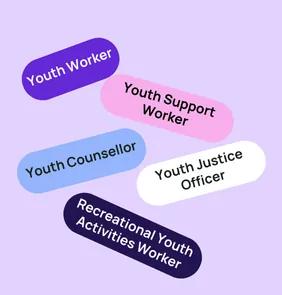
Graduates of youth work courses go on to fill a wide range of roles supporting and empowering young people. Once qualified, you might find work as a:
Youth workers take on a wide range of jobs to support young people through tough times. Day to day, they often:
Beyond one on one support, youth workers often team up with other professionals, schools, and community groups. Together they build a strong safety net around each young person. Many also take part in outreach work, helping more people find out about the services on offer.
Standing up for young people is a big part of the job too. Youth workers push for their rights within the wider community and help them build the confidence to make their own choices. This work often reaches further, into bigger issues like poverty, unfair treatment, and unequal access to education.
Youth work rewards a specific mix of personal qualities and practical ability. To do well in this field, you will generally need:
Job opportunities for youth workers remain strong and varied across Australia, driven by growing demand for youth support services. Graduates find work in community services, education, and government agencies, with strong demand in mental health support, youth justice, and out-of-home care.
According to SEEK Career Advice (2026), pay varies by sector. Workers in community services and development earn around $70,557 a year on average. Those in government and education earn a little less, at roughly $67,877 and $67,600. Workers who move into coordination or leadership roles tend to earn more again.
Yes. You can focus on mental health, youth justice, drug and alcohol services or education support. Many Diploma or bachelor’s courses offer these as elective units, including the Diploma of Community Services.
Many people use their youth work background to move into a degree in social work, psychology or counselling. Some providers offer credit for relevant prior study.
It depends on the employer, but Diploma graduates often lead programs or run small teams. Bigger leadership roles may call for extra experience or study.
Youth work follows the National Framework for Protecting Australia’s Children and state child safety laws.
Yes. Accredited RTOs award qualifications recognised right across Australia, tied to the national training packages listed on training.gov.au.