Accredited courses from leading Australian universities, TAFEs and colleges


Qualification Level
Accredited courses from leading Australian universities, TAFEs and colleges



Change management guides Australian firms through the shifts that shape their future. This spans everything from new tech to full restructures. It blends clear planning with a sharp read on how people react to change, which makes it a genuinely useful part of modern business.
Change managers draw on models such as ADKAR, Kotter’s 8-Step Process and Prosci. These models help plan a shift and check how well it takes hold. Jobs and Skills Australia tracks a close role called Organisation and Methods Analysts. Around 9,500 people hold this role, with a median age of 43. Seventy per cent of this group is female, which stands out next to many other strategic roles.
A Certificate IV in Leadership and Management gives career changers a firm base in the skills change roles need. Those who want senior, strategic roles often move on to a Graduate Certificate in Change Management. This builds real skill in working with stakeholders and running big shifts.
StudySelect lists government-funded spots on its own government-funded courses page. What you can claim shifts with your state and your own case. As Australian firms keep pouring money into new tech, staff who can guide people through change with real skill will stay in high demand.
Change Management workers may earn between $105000 and $190000 per year
According to SEEK (2026), change managers in Australia earn an average salary between $145,000 and $165,000. Change analysts, a common entry point into the field, typically earn between $105,000 and $120,000, while senior change leadership roles can pay well over $180,000.
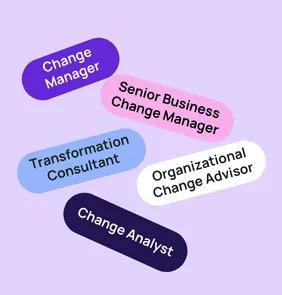
After completing a course in change management, you will be ready to step into roles that help organisations manage transitions with confidence. Common pathways include:
Change management professionals help organisations move from one way of working to another with as little disruption as possible. They plan each stage of a transition, communicate clearly with everyone affected, and build the support that makes new systems or structures stick. Their day-to-day work often includes:
Many change management professionals also work closely with project managers and senior leaders to keep transformation initiatives aligned with business goals. They pay close attention to how people feel about a change, not just whether new processes are technically in place. This human-centred approach helps organisations come out the other side of a transition more resilient and better prepared for whatever comes next.
Thriving in change management calls for a mix of people skills and clear thinking. Practitioners spend as much time on emotions as they do on timelines. The best professionals mix real empathy with the discipline needed to keep a complex plan on track. Useful skills and traits for this line of work include:
Demand for change management professionals remains strong across Australia, especially in banking, government, healthcare and technology. More firms now run large digital transformation projects. That trend keeps lifting the need for staff who can manage the human side of change.
SEEK (2026) data shows change managers earning an average salary between $145,000 and $165,000. Change analysts, a common way into the field, average between $105,000 and $120,000. Given this level of demand and pay, change management remains a genuinely rewarding path for people who enjoy variety and real impact at work.
A career in change management rewards people who can guide others through change with clarity and calm. Roles in this space span leadership, consulting and business strategy. A recognised course, such as the Graduate Certificate in Change Management, helps you stand out for roles in big transformation projects and people strategy.
A postgraduate course builds real depth in frameworks, strategy and stakeholder work. It suits staff moving into big change roles. It also suits those keen on further study down the track. Depending on your course, you may cover Prosci, Kotter’s 8-Step Process, ADKAR, Agile change work or Lewin’s Change Model. These models are used widely across Australian firms to manage big shifts.
Many courses now offer electives in tech-led change, agile work and human behaviour. This gives you deeper skill in fast-growing parts of the field. Flexible study, mixing online work with live sessions or a final project, suits working staff well.
Change skills carry real weight in leadership, consulting and strategy roles. A recognised course helps you stand out for work in big transformation projects and people strategy.
Yes. A Graduate Certificate in Change Management builds real depth in frameworks, strategy and stakeholder work. It suits people moving into big change roles or planning further study.
Depending on your course, you may cover Prosci, Kotter’s 8-Step Process, ADKAR, Agile change work or Lewin’s Change Model. Each is used widely across Australian firms to manage change.
Yes. Many courses offer electives in tech-led change, agile work and human behaviour. This gives you deeper skill in fast-growing parts of the field.
Yes. Many schools offer flexible study for working staff. These mix online work with live sessions or a final project.
Government, health, finance, higher education and large firms all rely on skilled change leaders. This holds true during big tech shifts, mergers or rule changes.