Accredited courses from leading Australian universities, TAFEs and colleges


Qualification Level
Accredited courses from leading Australian universities, TAFEs and colleges



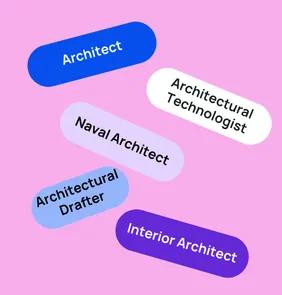
Architecture blends creative design with technical precision, and Australia’s built environment depends on it. Architects plan everything from family homes to major office towers, weighing a client’s brief against budget, planning rules and structural limits. It’s a career for people who like watching an idea move from sketch to finished building.
The role is registered. That means graduates cannot legally call themselves an architect until they meet standards set by the Architects Accreditation Council of Australia. The usual route is an accredited bachelor’s degree, then a master’s degree in architecture, followed by supervised work and a practice exam. Related paths such as building design or drafting offer a faster way in for people who want field experience without full registration straight away.
Pay tends to track experience and location closely. PayScale research shows registered architects earning between roughly $67,000 and $124,000, depending on seniority. Principal architects with a decade or more of experience report average pay above $170,000. Capital cities with busy building pipelines, especially Sydney, Melbourne and the ACT, tend to pay the most and offer the most roles.
Green design has become central to modern practice. Architects are now expected to design for energy use, material reuse and a changing climate, so ongoing training matters as much as the original degree. Studying flexibly, whether online, on campus or a mix of both, lets you build these skills at your own pace. That flexibility also helps you gain the hands-on work employers look for.
Architecture workers may earn between $67000 and $172000 per year
SEEK’s career advice data (2026) puts the typical architect salary in Australia between $90,000 and $110,000 a year. PayScale research on registered architects reports a wider range of roughly $67,000 to $124,000. Principal architects with a decade or more of experience report average pay above $170,000.
Graduates with an architecture qualification move into a wide range of roles across design and construction. Firms tend to hire steadily rather than in short bursts, so there is usually a clear next step once you finish study. Common positions to look for include working as a:
Each of these roles builds on the same core training, so moving between them over time is a normal part of an architecture career.
People working in architecture turn ideas for buildings into designs that are safe, useful and ready to build. Their day-to-day work often includes:
Talking with the community is part of the job too. Architects often join public consultations, listening to feedback from residents and councils. That helps make sure a design truly fits the community it serves, not just the site plan.
People who do well in architecture tend to combine a few creative and practical strengths at once, rather than relying on design talent alone. Employers usually want people who can move easily between big-picture ideas and fine detail work, since both matter on almost every job. Useful traits include:
Building these strengths over time, next to formal study, is often what sets a good architect apart from a great one.
Australia’s architecture job market has picked up as building work has grown again in major cities. Around 19,300 people work as architects nationally, based on Jobs and Skills Australia data, with most based in New South Wales and Victoria. Common roles on offer include project architect, senior architect and architectural graduate, which points to healthy movement within firms rather than a stuck market.
Green design skill is becoming a real hiring edge. More clients now want buildings that use less energy and suit a changing climate. Firms in Sydney, Melbourne and Brisbane keep looking for architects who pair strong technical skills with know-how on current green standards. That makes ongoing training a smart move alongside formal study.
Architecture rewards patience. The path to registration is long, but it leads to a role where you help shape whole neighbourhoods and city skylines.
Most architects finish a bachelor’s degree, then a master’s degree in architecture. Supervised work and a practice exam follow before you can register. It’s a demanding sequence, but a clear one, so you always know what comes next.
PayScale data puts registered architect pay between roughly $67,000 and $124,000, rising past $170,000 for senior staff. Study flexibly and you can keep building your portfolio while you learn.
University study gives you the theory, technical skills and industry accreditation you need to work as a professional architect. It also covers green design, heritage planning and design theory in real depth.
Yes. Many universities offer elective streams or extra study in green architecture, environmental design or building science. These skills matter more each year as Australia pushes for eco-friendly buildings.
Early-career architects tend to earn around $60,000 to $75,000 a year, while experienced staff earn $100,000 or more. Pay tends to rise with seniority, private practice or lead roles.
Leading schools include the University of Sydney, RMIT, the University of Melbourne and QUT. These schools offer degrees that meet AACA standards, so you can compare them by study mode, place and length.