Accredited courses from leading Australian universities, TAFEs and colleges


Qualification Level
Accredited courses from leading Australian universities, TAFEs and colleges



Australia’s manufacturing sector is still a big part of the national economy. It gives jobs to close to 900,000 people across food, machinery, chemicals and metal industries. For anyone weighing up a move into this space, it offers a wide range of paths to build a career around.
The field has moved well past old-style production lines. Many firms now use robots, automation and data checks, which builds demand for people who can link technical skills with day-to-day choices. This shift rewards ongoing learning and opens doors into production management, process work and supply chain roles.
Study options range from a Certificate III or Certificate IV for trade and boss-level skills. A Diploma or Advanced Diploma prepares graduates for top management roles. Government-funded places exist for some manufacturing courses, which can make upskilling cheaper. Before you enrol, check that a course sits on training.gov.au, Australia’s official list of nationally recognised training.
For those set on moving their career forward, manufacturing offers a stable, hands-on field with real room to grow.
Manufacturing workers may earn between $60000 and $125000 per year
Median weekly earnings across the manufacturing industry sit at $1,654, based on Jobs and Skills Australia‘s Labour Force Survey data from February 2026. That works out to close to $86,000 a year. Entry-level factory and production roles usually start between $60,000 and $75,000, according to 2026 SEEK Career Advice data. Experienced production managers and manufacturing engineers can earn $100,000 to $125,000 or more.
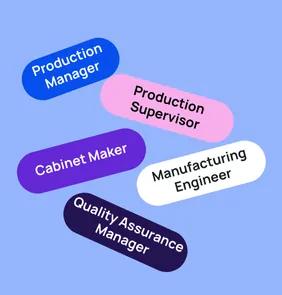
After finishing a manufacturing course, many graduates move straight into industry jobs, taking on roles in production, quality checks and technical work. Common job titles to look at include:
People trained in manufacturing take on hands-on, practical roles that keep Australian factories, workshops and plants running. Depending on their training and interests, they might work in:
Others move into more specialised paths, such as:
Whatever path they choose, manufacturing workers help build the products Australians use and export every day.
To do well in manufacturing, most employers look for a mix of technical skill and practical judgement, including:
Manufacturing offers a wide range of jobs across production, technical and management roles. As of February 2026, around 868,100 people work in the field nationally, according to Jobs and Skills Australia. Jobs have eased a little over the past year, down about 1 percent.
Demand stays strong in bakery and food goods, meat work, and machine-making, some of the biggest areas nationally. Graduates can find roles in both big manufacturing firms and smaller, focused operations, with skilled trades and production management always in demand.
As firms keep spending on robots and new production methods, fresh roles are opening up that mix trade skills with digital know-how. This is building new chances for skilled workers entering the field.
Advanced manufacturing blends old-style production with tools such as robots, automation and data checks. It aims for speed, precision and new ways of working, and it is becoming a big part of Australia’s future in this field.
Higher-level courses, such as an Advanced Diploma, can lead to roles in production planning, running operations or checking quality. These jobs usually carry more responsibility and stronger long-term growth.
Yes, more than ever. As plants adopt new tools, demand is growing for people who feel at ease with robots and data-driven work. Courses now build these skills alongside old-style trade knowledge.
Many providers mix online theory with in-person, hands-on training. A diploma-level course can suit people looking to upskill while working full-time.
Check that the provider sits on the official training list, or is approved by TEQSA. Look for strong industry ties, flexible study modes and a solid track record with past students.