Accredited courses from leading Australian universities, TAFEs and colleges

Accounting and Bookkeeping Courses



About Accounting and Bookkeeping
Australia employs about 91,800 bookkeepers and 215,500 accountants (Jobs and Skills Australia, 2025). Together they make up one of the country’s largest professional groups. The field spans construction, retail, health care and government, since every organisation needs its money managed well.
Bookkeepers handle the daily side of finance. They match up accounts, watch cash flow and prepare financial statements. Accountants add strategic depth through tax planning, audits and compliance advice. Most accountants also join a recognised professional body, such as CPA Australia, Chartered Accountants ANZ or the Institute of Public Accountants.
Cloud-based tools such as Xero, MYOB and QuickBooks are now standard across the field. Employers increasingly expect new staff to know these systems well. Nearly 90% of bookkeepers are women, and the median age sits at 52, showing a workforce with deep hands-on knowledge (JSA, 2025).
Earnings are strong across both roles. Full-time bookkeepers earn a median of $1,400 a week, while accountants earn $2,003 a week (ABS, May 2025). Jobs for accountants are forecast to grow by 5,800 a year, giving graduates a clear path toward career growth (JSA, 2025).
Average Salaries
Accounting and Bookkeeping workers may earn between $55000 and $130000 per year
Full-time bookkeepers earn a median of $1,400 a week, or about $72,800 a year (Australian Bureau of Statistics, Survey of Employee Earnings and Hours, May 2025). Accountants earn a median of $2,003 a week, or roughly $104,150 a year over the same period.
SEEK’s career advice data (July 2026) lists advertised bookkeeper salaries between $75,000 and $90,000, while accountant roles (SEEK, May 2026) are advertised between $80,000 and $95,000. Entry-level graduate accountants typically start around $55,000 to $67,000, and experienced senior accountants in major cities can earn well over $120,000 (Robert Half Salary Guide, 2026).
Career Outcomes
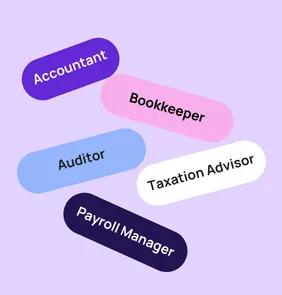
Once you finish your course, a wide range of finance roles open up to you. Accounting and bookkeeping skills are in demand across almost every sector of the economy. Common job titles in this field include:













What do Accounting and Bookkeeping graduates do?
People working in accounting and bookkeeping help businesses manage their money well. Here is what the work often looks like:
- Recording transactions and keeping accounts in order, using both software and paper systems.
- Watching cash flow and managing credit lines.
- Preparing budgets, financial statements and spending reports.
- Matching accounts against monthly bank statements.
- Checking entries and reporting problems to managers.
- Writing invoices, purchase orders and bank deposits.
- Helping prepare business tax returns and meet legal rules.
Bookkeepers also help with financial reviews and planning. This gives business owners the facts they need to make good choices. The work rewards people who notice details and stay organised. It also opens the door to a solid career in finance.
Is Accounting and Bookkeeping right for you?
Doing well in accounting or bookkeeping takes a specific mix of skills and personal qualities. Employers typically look for:
- A sharp eye for detail in financial records.
- Strong organisational skills and time management.
- Confidence with software such as Xero, MYOB or QuickBooks.
- Comfort working with financial data and reports.
- Clear communication skills with clients and colleagues.
- A methodical approach to solving discrepancies in the numbers.
- A working knowledge of tax obligations and compliance rules.
- The ability to work well both independently and in a team.
- A willingness to keep learning as legislation and software evolve.
If this sounds like you, this field could be an excellent fit. It rewards people who are careful, steady and genuinely keen to grow their expertise.
Job opportunities
The job market in this field remains solid. Accountant roles are growing by about 5,800 positions a year, while bookkeeper numbers have eased slightly as some routine tasks move to automation (Jobs and Skills Australia, 2025). Both paths still offer a genuine, long-term career.
Full-time bookkeepers earn a median of $1,400 a week, or roughly $72,800 a year (Australian Bureau of Statistics, May 2025). Accountants earn a median of $2,003 a week. SEEK’s July 2026 career advice data shows advertised bookkeeper roles between $75,000 and $90,000, and advertised accountant roles between $80,000 and $95,000.
Openings span professional services, financial services, construction and government. Employers increasingly want staff who are comfortable with digital tools and can contribute to bigger financial decisions. Ongoing study and professional body registration both help you move into senior, higher-paying roles over time.
Frequently Asked Questions
FAQs
How do I choose the right accounting or bookkeeping course?
Start by thinking about where you want to end up in your career. A Certificate IV is the best first step if you are new to finance, while a bachelor degree is needed for full accounting work. A Certificate IV in accounting and bookkeeping is the most common qualification.
Can I access FEE-HELP or VET Student Loans for accounting courses?
Yes. Some higher-level courses may be eligible for FEE-HELP or VET Student Loans. Check our funding options page to confirm whether you qualify.
Do accounting courses require work experience?
Most entry-level courses do not require prior experience. Many include a work placement to help you build genuine industry skills. This is a great way to get your foot in the door before you graduate.
What is the salary range for bookkeepers and accountants?
Full-time bookkeepers earn a median of $1,400 a week, or around $72,800 a year (ABS, May 2025). Accountants earn a median of $2,003 a week, and SEEK’s July 2026 data shows bookkeeper roles advertised at $75,000 to $90,000 a year.


