Accredited courses from leading Australian universities, TAFEs and colleges


Qualification Level
Accredited courses from leading Australian universities, TAFEs and colleges


Australia’s education industry employs more than 1.3 million people, making it one of the country’s largest sectors at close to 9% of the national workforce (Jobs and Skills Australia, 2026).
The industry spans early learning, schools, TAFE, and universities. School education remains the largest sector, followed by tertiary education and adult and community training. Growth has held steady for two decades, and employment rose by 52,800 workers in the year to February 2026 alone. Jobs and Skills Australia (2026) also reports median earnings of $1,903 a week across the industry, well above the all-industries median of $1,741.
Skilled teachers and trainers stay in demand across every state and territory. The Australian Qualifications Framework (AQF) sets one national standard for courses, so employers can trust a qualification no matter where you studied.
Many professionals move into education from another career, and just as many aim to progress within it. Further study is a common path for both groups. A Master’s degree in education can open doors to school leadership, curriculum design, or policy roles.
Online and blended study now sit alongside face-to-face classes in most schools and colleges. This shift has created new roles in course design and digital learning support. Employers look for strong communication skills, patience, and sound subject knowledge. Most roles also need a recognised teaching qualification, and in some states you must also register with a teacher regulation authority.
Education workers may earn between $55000 and $160000 per year
Pay in education varies a lot by role, sector, and experience. SEEK (2026) reports an average teacher salary of $100,000 to $110,000, while PayScale (2026) puts the broader teacher average closer to $74,500 once early-career staff are counted. Education aides and teacher’s aides average $70,000 to $75,000, according to SEEK (2026), and school principals can earn $155,000 to $160,000 with experience.
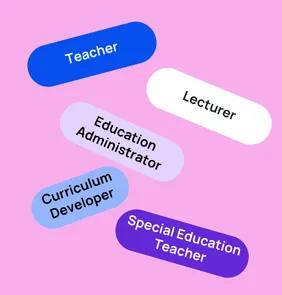
After you finish an education course, you might find work in a school, university, or training organisation. Roles you could take on after you graduate include working as a:
People working in education help others learn and grow, at every age and stage. This ranges from a child’s first day at school through to an adult returning to study later in life. Many work as teachers in primary or secondary schools, planning lessons, marking student work, and building a positive classroom. Others move into curriculum design, school leadership, or mentoring newer teachers as their careers progress.
In universities, graduates often become lecturers or tutors, teaching a subject area and guiding student research while carrying out their own research too. In vocational training, trainers teach hands-on skills that help people start or move up in a job. They often work closely with local employers to keep courses relevant to real workplaces.
Day-to-day work varies by setting, but common tasks include:
To do well in education, you need strong people skills and real drive. You also need patience, since a lesson does not always land the first time. Key strengths that help you thrive include:
Education offers a wide range of roles across schools, TAFEs, and universities. Jobs and Skills Australia (2026) reports the workforce grew by more than 52,800 people last year. Demand for skilled teachers and trainers remains strong across the country.
Beyond classroom teaching, graduates can move into school administration, curriculum design, or consulting work. Online learning has also opened new roles, letting teachers reach students far outside their local area and letting specialists build entire careers around digital delivery.
Growth is expected to stay steady, which gives a solid outlook for anyone starting a career in the industry, or building one further. It applies whether that means a first teaching role or a later move into leadership.
Education offers strong long-term prospects for professionals aiming for leadership, specialisation, or a career pivot into the sector. Choosing the right qualification early shapes how quickly you can move into those senior roles.
School leaders, curriculum designers, and senior teachers tend to earn the most, and a higher-level qualification often lifts your pay over time. Browse Master’s degree options in education to see what fits your goals.
Options include a postgraduate degree in education, a TESOL qualification, or a special education course. These let you focus on areas like school leadership or extra support in the classroom.
Yes, provided your course provider holds proper accreditation. Many leading universities now run online or blended classes, and employers increasingly judge the qualification rather than the study mode.
Many professionals move into training, curriculum design, or higher education roles by completing a focused course. You will find these options in our education course listings.
It is not essential, but it can open doors to senior roles and policy work. It also builds your skills and standing in the field. Visit QILT to check outcomes by provider.