Accredited courses from leading Australian universities, TAFEs and colleges

Cyber Security Courses



About Cyber Security
Cyber security has become one of Australia’s most important industries. It protects the digital systems that businesses and government rely on every day. The Australian Cyber Security Centre leads the national response to threats, working with private firms to boost defences across finance, health, energy and telecommunications. Jobs and Skills Australia expects strong growth in cyber security jobs over the next few years.
This growth is good news for anyone looking to move into a stable, future-focused career. Analysts, engineers, testers and governance specialists are all in demand. Many employers value practical problem-solving as much as formal tech skills. For people already in IT, business or law, cyber security is a natural next step.
A certificate IV or diploma in cyber security gives career changers a clear route into the field, covering network security, risk and incident response. These courses are built for part-time study, so you can keep working while you retrain. Many graduates move into an entry-level role within months of finishing.
Government funding options can cut the cost of study for eligible applicants. This makes the switch into cyber security more affordable than many people assume. If you want a career with long-term security, the courses on this page are a strong place to start.
Average Salaries
Cyber Security workers may earn between $70000 and $150000 per year
According to SEEK Career Advice (2026), Cyber Security Analysts in Australia typically earn between $100,000 and $120,000 a year. Senior specialists and engineers often earn upward of $150,000. PayScale (2026) reports that entry-level professionals start lower, averaging around $70,500 in total compensation as they build experience.
Career Outcomes
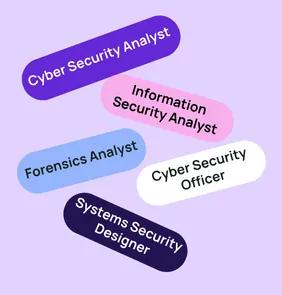
Once you have completed a cyber security course, a wide range of roles become open to you across the information security sector. Common career outcomes include working as a:












What do Cyber Security graduates do?
People who work in cyber security spend their days guarding the systems, networks and data that firms need to run. Day to day tasks can include:
- Testing networks and systems to find weak spots first.
- Setting up firewalls and codes to guard private data.
- Watching systems round the clock for odd or risky activity.
- Writing rules that keep staff and systems safe.
- Teaching staff safe habits, from strong passwords to spotting scams.
- Looking into breaches to learn what went wrong and stop it again.
- Tracking new threats and shifting defences as attackers change tack.
- Working with other IT staff to build stronger group defence.
The role blends tech skill with sharp thinking and clear speech. Staff must explain risk to non-tech co-workers as well as fix the root cause.
Is Cyber Security right for you?
Cyber security suits people who like solving puzzles and spotting small details others miss. To do well in this field, it helps to mix tech skill with clear speech and calm thinking. Useful strengths include:
- Sharp problem-solving skills
- A close eye for spotting threats
- Comfort working with networks and systems
- A grasp of security rules and standards
- The ability to stay calm and act fast in a crisis
- Clear speech for explaining risk to non-tech staff
- A team-first approach to work
- A drive to keep learning as threats change
You do not need all of these skills on day one. Most grow with time, once you gain hands-on experience in the role.
Job opportunities
The job market for cyber security staff in Australia stays strong, since demand for skilled workers keeps beating supply. Analysts often earn six figures. Senior staff in engineering or leadership roles can earn much more as they take on greater weight.
Banks, hospitals, government bodies and tech firms are among the biggest hirers. All of them lean on strong cyber defence to guard data and keep trust with clients. As more firms report attacks each year, hiring in this space should keep rising, which bodes well for new graduates.
Frequently Asked Questions
For anyone thinking hard about their next move, cyber security offers a rare mix of stable work and constant new problems to solve. As firms put more of their work online, the risks grow too. So does the need for staff who can handle those risks with skill.
This field pays off the more you learn. Certificates, higher study and hands-on work all add up over time, giving skilled staff real weight when it comes to pay talks and career moves. It suits people keen to shift over from fields such as IT, law or risk work.
FAQs
What is the long-term value of studying cyber security?
Cyber security is one of the most future-proof fields in the world. As digital work keeps changing, firms need skilled staff to cut risk and lead defence plans. Graduates enjoy strong demand, flexible work and good pay.
Which degrees support a career in cyber security?
Degrees in cyber security, IT or computer science with a security focus give you deep tech skill. Higher study and badges such as CISSP or CompTIA can speed up your climb.
How does cyber security impact national security?
Cyber attacks can hit key services, business systems and private data. The Australian Cyber Security Centre treats this as a top risk for the country. That opens up work for local experts in defence, government and intelligence.
What industries hire cyber security professionals?
From banks and hospitals to transport and shops, every field needs cyber experts. Schools and charities are now spending more on this too, so your job options run wide, both here and abroad.
Can I combine cyber security with other skills?
Yes. Cyber security pairs well with law, data work, psychology and business. Mixed skill sets stand out most in roles like digital forensics, policy work and cyber security leadership.


