Accredited courses from leading Australian universities, TAFEs and colleges


Qualification Level
Accredited courses from leading Australian universities, TAFEs and colleges


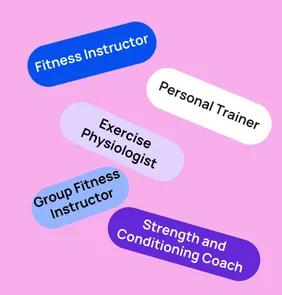
Australia’s fitness industry keeps growing as more people invest in long-term health. Jobs and Skills Australia (2025) reports steady growth in the field. Personal trainers, group exercise instructors, gym staff, and wellness coaches are all part of this expanding sector.
Most fitness qualifications now run largely online, pairing flexible theory study with in-person practical assessment. This structure lets you fit training around a job, study, or family life without losing hands-on skill development.
Employers increasingly value digital skills alongside hands-on coaching ability. Trainers who can manage bookings, track client progress online, and run virtual sessions tend to stand out in a competitive market.
Fitness careers extend well past the workout floor, since many trainers also support clients with basic nutrition guidance and mental wellbeing strategies. This broader skill set helps you build programs around lasting, sustainable change rather than short-term results.
Explore fitness courses on StudySelect to compare study modes, costs, and entry requirements before you enrol.
Fitness workers may earn between $55000 and $90000 per year
Jobs and Skills Australia (2025) puts median full-time earnings for fitness instructors at $1,500 a week, close to $78,000 a year before tax.
PayScale’s 2025 Australian data shows instructors earning just under $30 an hour on average.
SEEK’s 2026 career advice page puts personal trainer salaries between $70,000 and $90,000 a year.
That extra earning potential usually comes once you hold a Certificate IV and have built a steady client base.
After completing a fitness course, you can step into a range of roles across the industry. Some graduates train clients one-on-one, while others lead group classes or help run a gym.
Common roles you might take on include:
Fitness graduates help people build strength, boost energy, and feel more confident in their bodies. Many work as personal trainers, guiding clients through workouts built around their individual goals.
Others lead group fitness classes, teaching styles such as yoga, Pilates, or high-intensity training, and creating a supportive, encouraging atmosphere for everyone in the room.
Some graduates move into gym management, overseeing daily operations, keeping members safe, and making sure equipment stays in good working order.
Typical tasks include:
Successful fitness professionals share a few key qualities that help build client trust and support a long, sustainable career. Look for these strengths in yourself:
Fitness graduates have plenty of places to work, including gyms, fitness studios, community centres, and corporate wellness programs.
Jobs and Skills Australia data (2025) shows fitness instructors earn a median of $1,500 a week before tax, close to $78,000 a year. Employment in the role has been growing steadily across the country.
Some graduates move into niche areas such as rehabilitation support, sport performance training, or nutrition coaching.
Online fitness platforms have also opened up new ways to work, giving you more control over where and how you coach clients.
A fitness course can take you well past the gym floor, since many graduates move into corporate wellness, health coaching, or business-focused roles.
The SIS30321 Certificate III and SIS40221 Certificate IV in Fitness give you a strong foundation in personal training. From there, you could study sport management or health promotion to broaden your skill set.
Some graduates use fitness training as a stepping stone toward exercise science or allied health, though those pathways still require a full university degree.
Always check that your course carries proper accreditation, and look for training providers listed on training.gov.au, the official register of approved courses.
Browse fitness courses on StudySelect to compare your options.
Yes. More organisations now run workplace health programs for staff. A fitness course, paired with study in health promotion or human resources, can lead to roles in workplace wellness, health coaching, and injury prevention support.
Many graduates start as a personal trainer or fitness instructor before moving into their own business, advanced coaching, or teaching roles. Further study in sport management or exercise science can also open new directions.
They can help, though a fitness certificate won’t replace a full degree. The practical skills and industry knowledge you gain give you a genuine head start in physiotherapy or exercise science study at university.
Look for courses delivered by a Registered Training Organisation, known as an RTO, and listed on training.gov.au. Every course listed on StudySelect meets this national standard.
Yes. With a background in health or fitness, you can go on to study sports science, allied health, or advanced coaching. Universities and specialist colleges across Australia offer these pathways.