Accredited courses from leading Australian universities, TAFEs and colleges


Qualification Level
Accredited courses from leading Australian universities, TAFEs and colleges



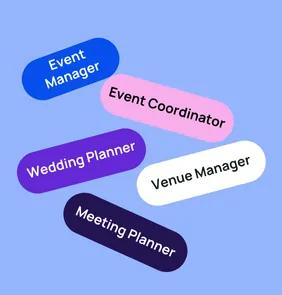
Event management offers experienced professionals a real path forward. The field spans corporate conferences, exhibitions, festivals and large public events. Around 31,200 conference and event organisers work across Australia, and women hold 72 percent of those roles, per Jobs and Skills Australia. Businesses now lean more on events to build their brand and meet clients face to face. This gives well-trained event staff a strong shot at moving into senior roles.
A course such as the Diploma of Business (Event Management) builds the budgeting, negotiation and people-management skills needed for a move into leadership. You can check its full details on the national training register. Many students study part-time or online while they keep working. This lets them try new skills out on live projects right away.
Median full-time pay for the role sits at around $1,634 a week. Demand stays steady across admin services, education and arts and recreation. For staff who want real variety and room to specialise, from destination management to events strategy, this field offers strong long-term prospects.
Event Management workers may earn between $55000 and $150000 per year
Jobs and Skills Australia’s 2026 occupation profile puts median full-time pay for conference and event organisers at around $1,634 a week. That works out to roughly $85,000 a year. Entry-level coordinators often start closer to $55,000. Senior event and venue managers in corporate or business events can earn upward of $150,000, depending on experience and sector.
After finishing a course in event management, graduates can move into a range of roles across the field, including work such as:
Event pros take on a wide range of tasks to plan and run conferences, functions and public events from start to finish. Typical work includes:
Beyond these core tasks, event pros need to stay across trends in the field. Strong problem-solving and the ability to adapt at short notice are part of everyday event work.
A career in event management suits people who enjoy variety, work well under pressure and take real pride in getting the details right. Employers in this field tend to look for a solid mix of practical and people skills, including:
Employment in event management stays steady, with around 31,200 people working as conference and event organisers across Australia, per Jobs and Skills Australia’s 2026 data. Women hold 72 percent of these roles. Demand continues across admin and support services, education and training, and arts and recreation.
Median full-time pay for the role sits at around $1,634 a week. This reflects the value employers place on skilled event staff. Businesses keep investing in conferences, exhibitions and corporate events to build relationships and brand presence. This keeps qualified event managers in demand across a wide range of sectors.
For professionals who already have industry experience, further study can open the door to strategic and lead roles in event management. The right course builds on practical skills with a deeper grasp of budgets, client relations and large-scale project delivery.
A bachelor degree with a focus on event management, business or tourism and hospitality suits lead roles well. A dual major that pairs events with marketing also helps in senior jobs.
Corporate events, government projects, destination work and large cultural shows rely more and more on skilled event managers with strong budget and lead skills.
Yes, for many people. A graduate certificate or a master’s-level course in event or hospitality can support a move into strategy work, ops management or events held overseas.
Hybrid event styles, green planning, guest experience design and data-based results checks now sit at the core of the trade. Building skills in these areas gives you a real edge.
Yes. Australian event courses hold strong regard overseas, most of all across Asia-Pacific and the UK. Many also cover ideas and best practice used the world over.