Accredited courses from leading Australian universities, TAFEs and colleges


Qualification Level
Accredited courses from leading Australian universities, TAFEs and colleges



Community development is a practical, people-focused field built on teamwork and trust. Workers team up with local residents, councils, and grassroots groups to find out what a community needs, then build programs that respond to it.
This field spans social work, urban planning, and public health, but every part shares one goal: stronger, more connected communities. The methods stay similar, whether the work happens in an inner-city suburb or a remote regional town.
Study options range from vocational certificate IV-level courses through to postgraduate degrees, so you can enter at a level that fits your experience. Many courses mix classroom learning with a supervised placement, so you graduate with real, hands-on skills.
As Australia deals with rising housing pressure and social disconnection, skilled community development workers stay in steady demand. It is a career where your study leads to work you can see and feel in your own neighbourhood.
Community Development workers may earn between $60000 and $130000 per year
Community development workers in Australia typically earn between $60,000 and $130,000 a year, based on role and experience. The average sits around $90,000 a year for a community development officer (SEEK Career Advice, 2026). Entry-level roles such as engagement officer or outreach worker start lower. Senior program and manager roles can top $120,000 a year.
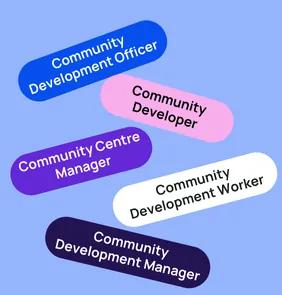
After finishing a community development course, graduates take on a wide range of roles focused on community wellbeing and fairness. Common jobs include working as a:
People in community development help neighbourhoods and groups fix shared problems and lift quality of life. They meet with local residents to work out what is needed, then build and run programs that respond to it. Common tasks include:
Many workers focus on one area, such as youth work, green projects, or local jobs growth. Most work inside charities, government teams, or community groups, all aiming to help people build change together.
Doing well in community development takes a mix of people skills and good judgement. People who thrive in this field tend to build the following strengths:
Job openings in this field span government teams, charities, and grassroots local projects. Graduates often move into roles such as engagement officer, social worker, or project manager, all focused on helping local people thrive.
Jobs and Skills Australia data points to steady, ongoing need for welfare and support staff. State and federal funds keep flowing into aged care, housing, and mental health work, and that spend drives much of this growth.
Jobs exist in cities, in country towns, and in remote areas in every state. Bosses now put more weight on degree-level study for senior and policy-facing roles in this field.
Community development is a field built on backing communities and helping lasting change take hold. Workers plan and run programs that lift equity, wellbeing, and voice across health, housing, youth work, and support for migrants.
Bachelor and postgraduate degrees give you a wide view of social systems, policy, and advocacy work. They suit people who want to move into senior roles or help shape strategy for a whole community.
Good community development lines up closely with policy in areas such as aged care, First Nations support, and social housing. Workers often feed back into how services and policy get built.
Yes. Many courses include time in a real community group, so you build hands-on skills. These placements often lead to strong industry ties and real job offers.
Yes. Many graduates go on to study social work, public health, or public policy, using this field as a strong base to build from.