Accredited courses from leading Australian universities, TAFEs and colleges


Qualification Level
Accredited courses from leading Australian universities, TAFEs and colleges



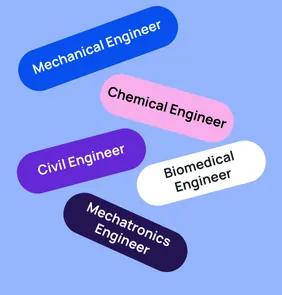
Engineering is a vital part of the Australian economy, spanning civil, mechanical, electrical and environmental work, plus newer fields like software engineering. Engineers Australia, the profession’s peak body, now counts more than 140,000 members nationally. That shows just how far the field has grown beyond its traditional roots. Jobs and Skills Australia continues to track strong demand for engineering skills nationally. Engineers work on the roads, power systems and technology that keep daily life running, which makes the job both practical and genuinely useful.
Talent shortages are shaping the job market right now. Hays research from 2026 found that 93 per cent of engineering employers were short on skilled staff. That was the highest shortage rate of any sector the firm tracked. Civil, structural and geotechnical engineering are seeing the strongest pay rises, mostly in specialist and technical roles rather than spread evenly across the workforce.
For people already working in a related field, further study is a common way to move up or specialise. A Master of Civil Engineering or a graduate certificate can build on a science, maths or technical background. Neither requires a second undergraduate degree. That makes engineering a realistic career change for people coming from related industries.
As construction, renewable energy and manufacturing keep growing, engineers with sharp, up-to-date skills are well placed to move up quickly. The field rewards ongoing learning, so studying part-time while you work is a realistic way to build both expertise and earning power over time.
Engineering workers may earn between $65000 and $180000 per year
Engineers earn strong, above-average wages in Australia. SEEK career advice data for August 2026 puts the typical Engineer salary between $110,000 and $130,000 a year. Entry-level graduates tend to start closer to $65,000, based on PayScale’s 2026 research into civil, mechanical and electrical roles. Senior specialists and engineering managers can earn $180,000 or more once they take on complex projects and leadership responsibilities.
Engineering graduates move into a wide mix of roles across many industries, not just engineering firms. Depending on your field and interests, you might take on a role such as:
People working in engineering take on a wide mix of roles that bring designs and structures to life. Day to day work often includes:
Through this mix of hands-on and team-based work, engineers help build the roads, tech and systems people rely on every day.
Engineering suits people who like solving practical problems and working with precision. To do well in the field, it helps to have:
Engineering offers a wide range of job openings across building, manufacturing, energy and tech. Skilled workers are in short supply across much of the field, so graduates can find roles in both government and private firms. Many of these projects have a real, visible impact on the wider community. The Australian Bureau of Statistics keeps tracking steady growth in skilled trade and professional jobs, engineering among them, as building and tech spending keeps rising.
Common employers include engineering firms, government agencies and large companies across many sectors. Many engineers choose to focus on one area. Common picks include green engineering, structural work and project management. This tends to open up more career options over time. Ongoing training stays central to the job. It gives engineers a clear way to keep moving forward through further study and hands-on work.
Thinking about the next step in your engineering career? Postgraduate study is a clear way to specialise or move into leadership. Master’s degrees in civil, mechanical, electrical and software engineering stay in high demand. There is also growing interest in engineering management and environmental engineering among people who want senior roles.
If your background is in science, maths or IT rather than engineering, a graduate certificate or bridging course is often the fastest way in. Many universities build these paths for mature-age students and career changers. That means you can build on skills you already have, rather than starting again from scratch.
Australian engineering degrees carry weight overseas through the Washington Accord. That means registered engineers can often work in places like the United States, the United Kingdom and Canada. Fields like AI-driven design, renewable energy and medical devices are also growing fast, giving experienced staff plenty of room to move into new, forward-looking work.
Reaching Chartered status through Engineers Australia is widely seen as a strong credential. It can lift your standing, support higher pay, and open doors to leadership roles and work on projects overseas.
Master’s degrees in civil, mechanical, electrical and software engineering are in high demand. Engineering management and environmental engineering are also sought after by people aiming for senior roles.
If you have a background in science, maths or IT, a bridging course or graduate certificate can help you get in. Many schools design paths for mature students and career changers.
Yes. Australian engineering degrees carry weight overseas through the Washington Accord. This lets registered engineers work in places such as the United States, United Kingdom and Canada.
Fields like AI-driven design, renewable energy, medical devices and space systems are pushing new ground. If you want to help shape the future, these areas offer real scope for growth.
Yes, for most people. Chartered status through Engineers Australia boosts your standing, can lift your pay, and often opens doors to leadership roles and work overseas.