Accredited courses from leading Australian universities, TAFEs and colleges


Qualification Level
Accredited courses from leading Australian universities, TAFEs and colleges



Information technology is one of Australia’s largest and fastest-changing fields. It spans software, IT consulting, network management and tech support. Big firms and small local businesses alike rely on skilled tech workers. That shared need has built a truly national job market, with roles open in every capital city.
Digital change is reshaping almost every sector, from banking and health to retail and logistics. Firms are putting money into cloud tools, automation and data-driven choices. They need people who grasp both the tech and the business problems it solves. That is why IT careers now reward people who pair technical skill with strong communication and clear thinking.
Study paths in this field are unusually flexible. You can start with a Diploma of Information Technology and move into work fast. Or you can work toward a Bachelor of Information Technology if you are aiming for design, leadership or research roles later on. Many courses run online or in blended form, which suits people juggling study with work or family life.
Jobs and Skills Australia ranks tech roles among the strongest growth areas in the country. Cybersecurity, cloud and data roles lead that growth. Paired with strong pay and clear paths up, this makes IT a smart pick for a long-term career move.
IT workers may earn between $65000 and $185000 per year
According to PayScale (2026), the average salary across Australia’s IT industry is around $87,000 a year. Entry-level support and helpdesk roles typically start closer to $65,000. Senior specialists such as solutions architects and IT managers can earn upward of $185,000, depending on experience and location.
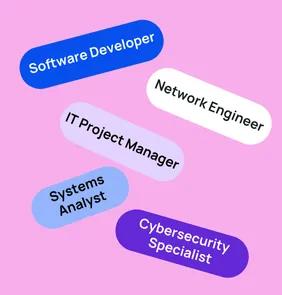
After finishing a course in IT, grads tend to move into roles that match what they studied. That might be software, networks, data or security, depending on the path they chose. Common job titles that IT grads go on to hold include:
People working in IT help build, run and look after the systems that businesses and communities use every day. Some focus on software, making the apps and platforms people use for work, banking, shopping and staying in touch. Others keep systems running well and help fix issues as they come up.
Common roles in this field include:
Skill matters, but so does teamwork. IT workers often team up with other parts of the business to make sure tech fixes actually solve real problems. That teamwork is often what turns a good result into a great one. This mix of tech know-how and people skills is part of what makes IT such a rewarding field to work in.
Doing well in IT takes more than tech know-how alone. The best workers in this field mix practical skill with curiosity and clear thinking. Key strengths worth building include:
The job market for IT workers in Australia stays strong. Demand for skilled staff holds steady across almost every sector. The Australian Bureau of Statistics tracks tech as one of the more stable areas of work. Roles in software, IT support and cybersecurity are in high demand as firms lean further into digital tools. You can check current labour data through the Australian Bureau of Statistics.
Pay reflects that demand. According to PayScale, the average IT salary in Australia sits at around $87,000 in 2026. Entry-level support roles start lower, while senior staff such as solutions architects earn a lot more. Paired with real scope to move up, this makes IT one of the more attractive fields for grads weighing up long-term options.
A Bachelor of Information Technology or Computer Science prepares you for a wide range of tech roles — from software development to systems engineering. Double majors or combined degrees (e.g. IT + Business or Design) are great for career flexibility.
Yes. Many degrees and diplomas offer streams in cybersecurity, AI, cloud systems, and data science. These are some of the most in-demand tech disciplines in Australia.
Strong. According to Labour Market Insights, IT jobs — especially in cloud services, data, and security — are growing rapidly. Many graduates find work in under 6 months, especially if they complete internships.
If you’re aiming for senior roles, research, or leadership in areas like AI or cybersecurity, a Master of IT or Master of Data Science may be worth it. Postgrad study also supports career shifts from non-technical fields.
Look for accredited institutions, industry certification pathways (e.g. Cisco, AWS), internship opportunities, and partnerships with tech employers. Visit training.gov.au to check accreditation status.