Accredited courses from leading Australian universities, TAFEs and colleges


Qualification Level
Accredited courses from leading Australian universities, TAFEs and colleges



Business is one of Australia’s broadest study areas. At 30 June 2025, the Australian Bureau of Statistics counted 2,729,648 actively trading businesses across the country. They span every sector, from retail to professional services. That breadth means a business qualification opens doors well beyond a single job title.
Jobs and Skills Australia expects the workforce to grow 13.7% over the decade to 2034. That is close to two million new jobs. Much of that growth sits in skilled roles, including business, HR and marketing professionals, per Jobs and Skills Australia (2026). For professionals looking to advance, that signals steady demand rather than a short-term trend.
Study pathways suit almost any career stage. A Certificate III in Business builds foundational skills. A Certificate IV or diploma adds the operational know-how needed for supervisory roles. Postgraduate study, including an MBA, suits those planning a move into senior leadership.
Business managers in Australia earn between $105,000 and $125,000 a year, per SEEK data (2026). Pay tends to rise steadily with seniority and specialisation. For those who want a qualification with real breadth, business remains one of the strongest choices around.
Business workers may earn between $55000 and $140000 per year
Business managers in Australia earn between $105,000 and $125,000 a year, per SEEK career advice data (2026). Business analysts sit in a similar range. Entry-level roles start considerably lower. A graduate business development officer earns around $62,700, per PayScale research (2026). Senior managers and directors in larger organisations can earn well beyond $140,000 as they take on more strategic work.
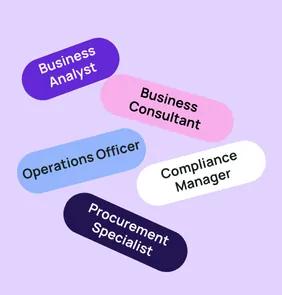
After completing a course in business, graduates can move into a wide range of roles across almost every industry. Common job titles include working as a:
People who study business go on to do a wide range of jobs. The mix of tasks can look different from one week to the next. Common responsibilities include:
Many graduates take on leadership responsibilities over time, guiding teams and shaping strategy as they gain experience. That variety is part of why so many people build a long, rewarding career in business.
To do well in business, you need a mix of commercial sense and people skills, since the work rarely stays the same for long. Clear talk matters most, and a good head for numbers runs a close second. Sound judgement under pressure counts for a lot too. A flexible mindset helps when plans shift without warning.
The job market for people in business stays broad, with work on offer across almost every field. That spans retail and health care through to finance and tech. Business, HR and sales and marketing jobs sit among the fastest-growing skilled roles over the next ten years, per national workforce data.
SEEK career advice figures from 2026 show business managers earn between $105,000 and $125,000 a year, with business analysts sitting in a like range. Entry-level jobs start well below that. A graduate business development officer earns around $62,700, per PayScale research (2026).
Firms keep spending on growth, digital tools and better choices. Demand for skilled staff in business should stay firm across both big firms and small ones.
If you already have workplace experience, postgraduate business study offers a direct route into leadership roles. Graduate certificates, graduate diplomas and MBAs let you build on skills you already have. You are not starting from scratch.
The right level of study depends on where you want to end up. A graduate certificate suits focused upskilling in one area. An MBA takes a broader approach. It often includes strategic projects and case-study work aimed at leadership.
Degrees with a focus on analytics, finance and strategy, such as an MBA, tend to offer strong long-term value. Steady salary growth and consistent demand support that.
An MBA is a broad, leadership-focused qualification. It usually includes strategic coursework and a capstone project. A postgraduate diploma is shorter and more specialised, often used for targeted upskilling in one area.
Yes. Many providers now offer majors or electives in digital marketing, human resources, supply chain management and sustainable business practice.
Some postgraduate business courses are eligible for FEE-HELP loans or government-funded places. Check individual course pages for current eligibility.
Look for institutions accredited by the Tertiary Education Quality and Standards Agency (TEQSA). You can also check a course directly on training.gov.au. Accreditation confirms a course meets national standards.
Yes. Technology, flexible work and global markets keep changing fast, and business skills are in high demand. Enrolling now sets you up for growth in an economy that keeps evolving.